


About the project
For the “Dr I.A. Sbârcea” Clinical Hospital of Obstetrics and Gynaecology in Brașov, KRONTAB has installed a comprehensive low-voltage distribution system designed to supply both standard and critical loads, as well as technical installations and medical areas with special requirements.
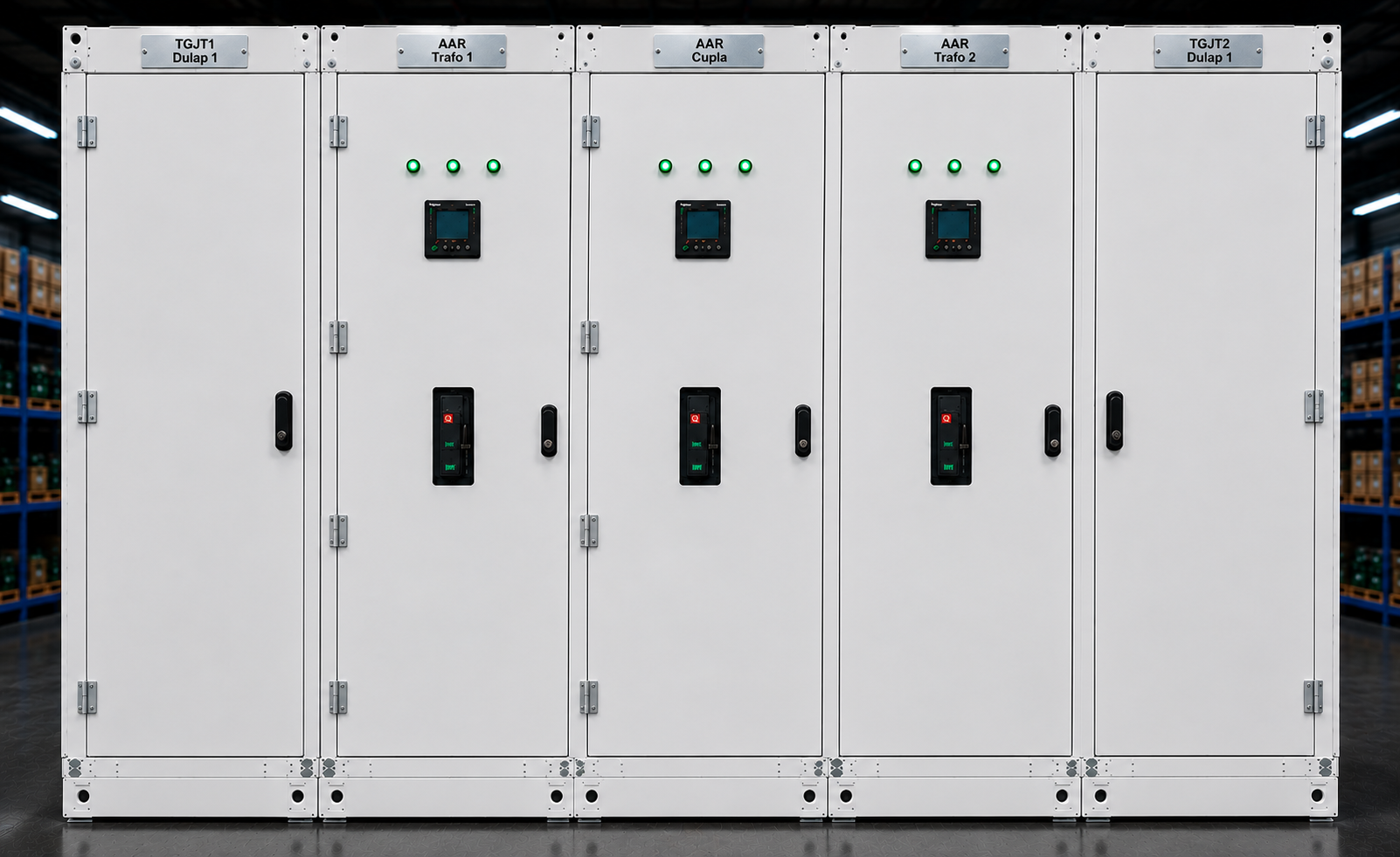
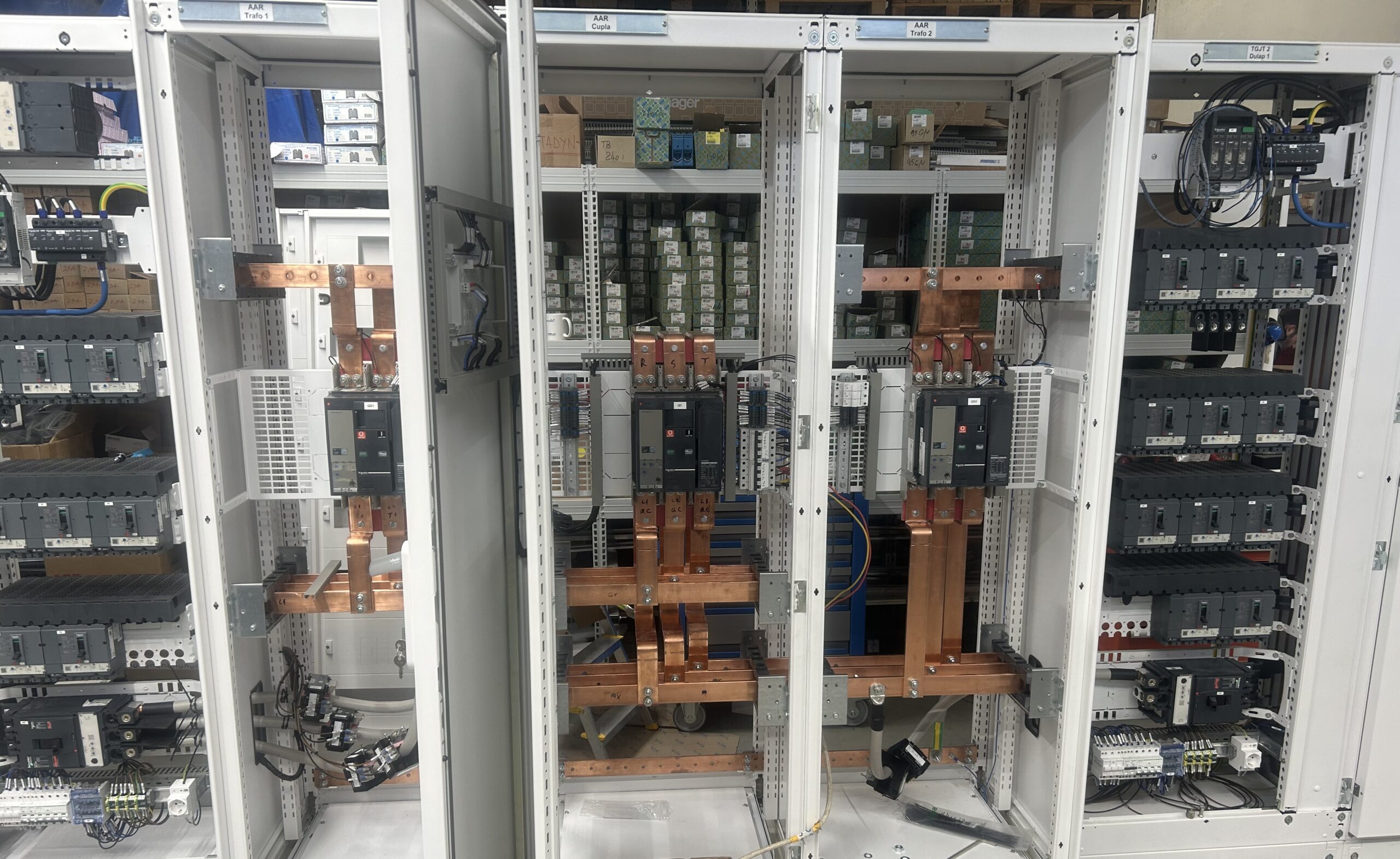
The solution is based on a 1,600 A low-voltage main distribution board, configured with two 1,600 A power supplies and a 1,600 A coupler, with an integrated ATS system for automatic switching between sources.
The main distribution system is supplemented by two reactive power compensation banks, each rated at 150 kVAr, as well as approximately 30 electrical switchboards serving various functions within the hospital: standard and critical loads, the intensive care unit, operating theatres, the heating plant, ventilation, fire safety systems, lighting, power sockets and other technical areas.
The entire system is built using Schneider Electric equipment, and the solution has been configured with a focus on safety, continuity of power supply and the ability to monitor and control the electrical distribution system.
Benefits:
Built around the requirements of each project.
Control over the entire manufacturing process.
Equipment and systems from established manufacturers.
Every switchboard is inspected and tested before delivery.
Reliability designed for long-term operation.
Supplier of Equipment Used

Implemented solution
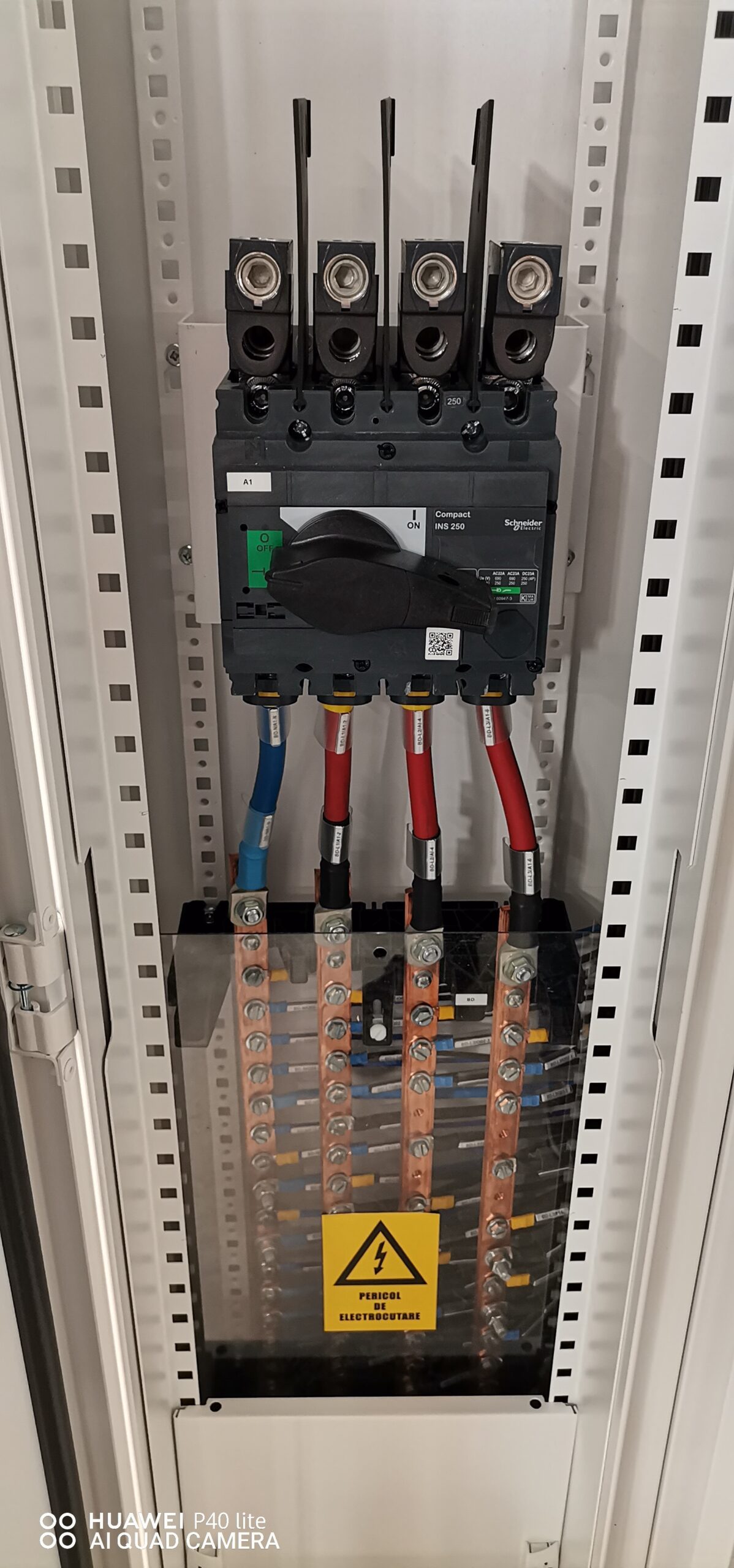
The Main Low-Voltage Switchboard is the primary power distribution point for the hospital’s installations and loads.
The TEG is configured with two 1600 A incomers and a 1600 A bus coupler, allowing management of the two power sources and providing flexibility in the operation of the main distribution system.
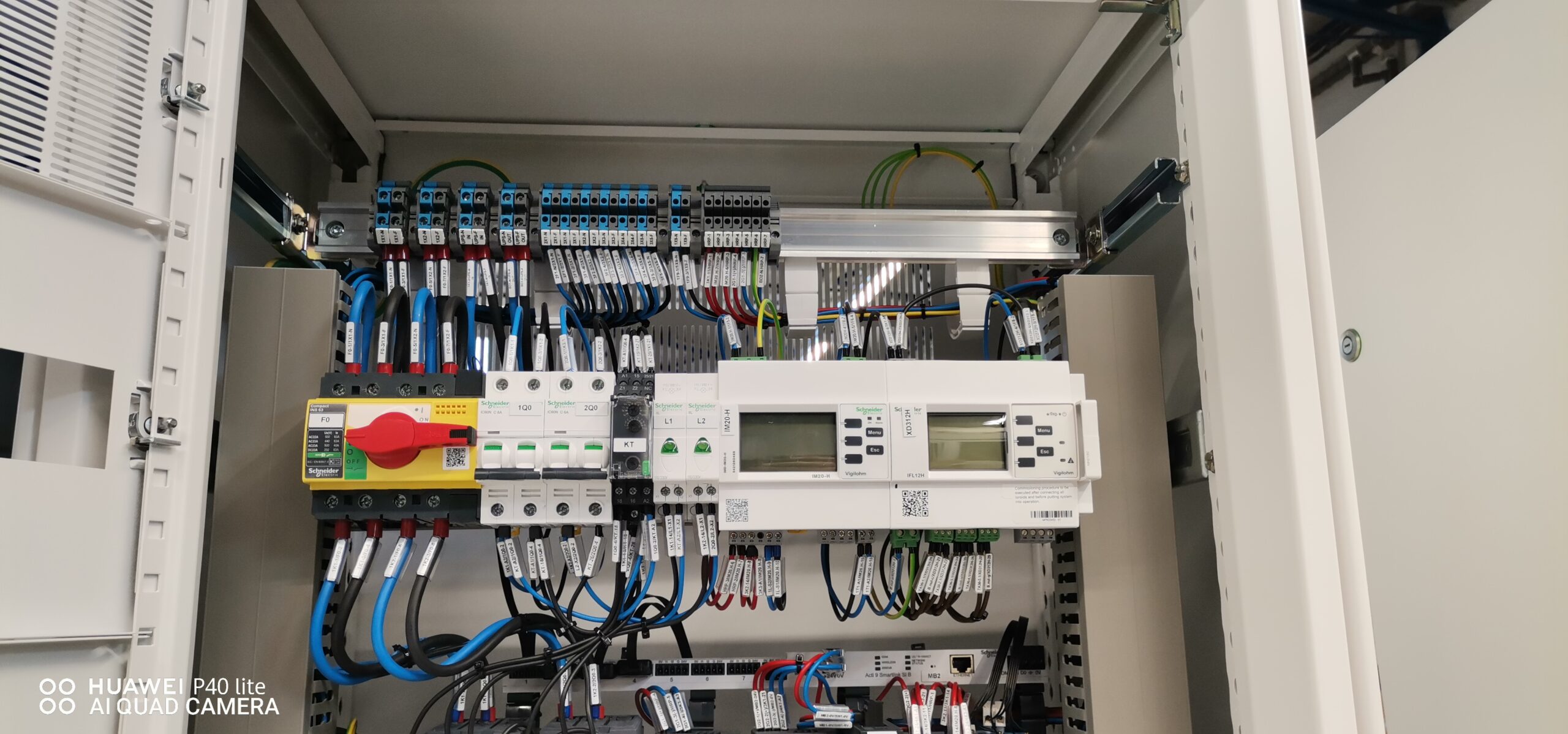
The integrated ATS monitors source availability and manages transfer sequences and the operation of the main circuit breakers, helping reduce interruption time if one of the power sources becomes unavailable.
In a medical facility, where certain loads require continuous power availability, this architecture contributes to increased continuity and safety of the power supply.
Distribution to the main categories of loads is provided through 14 sub-distribution switchboards, including 7 for normal loads and 7 for essential loads.
This separation allows the distribution system to be organized according to the importance of the loads and their required level of power supply continuity.
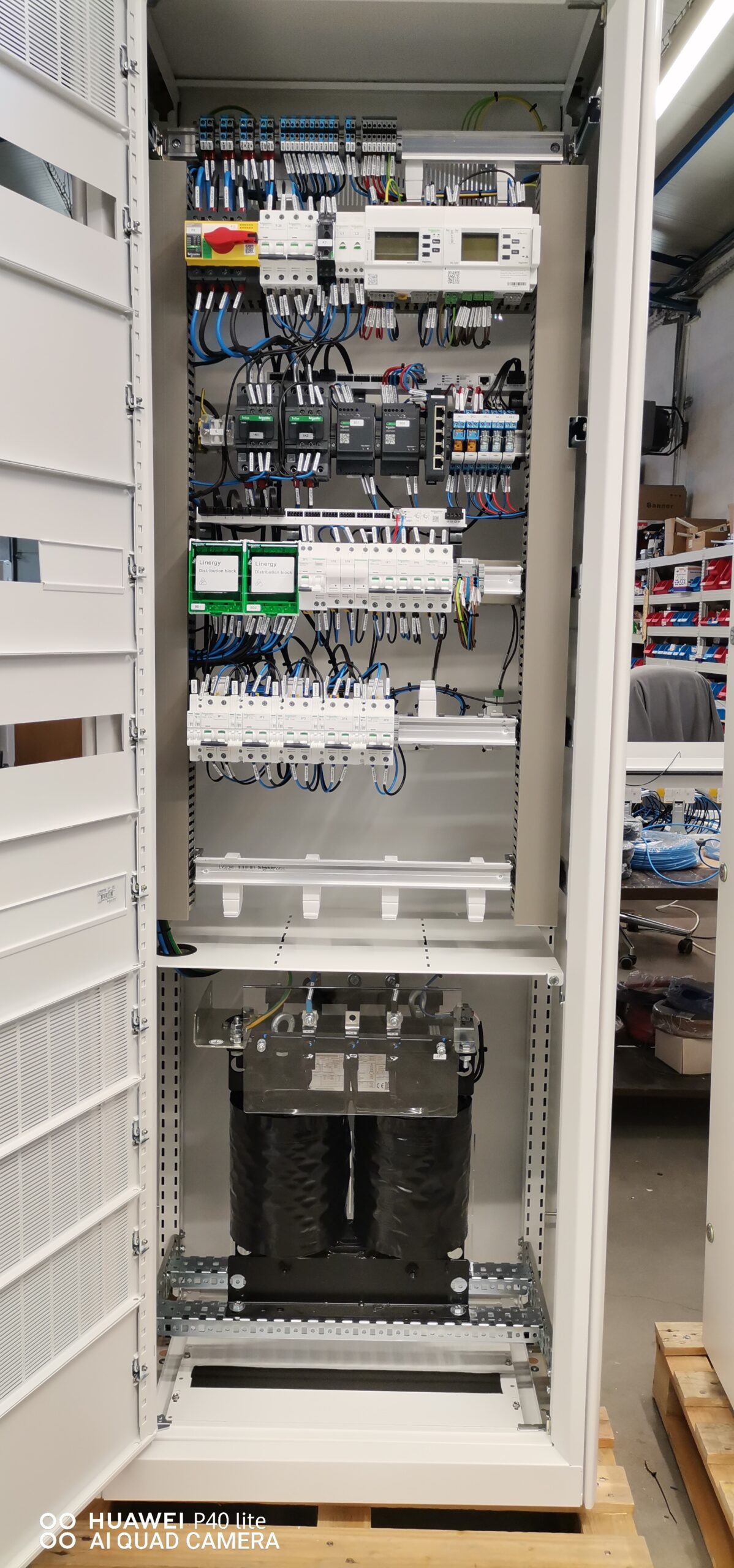
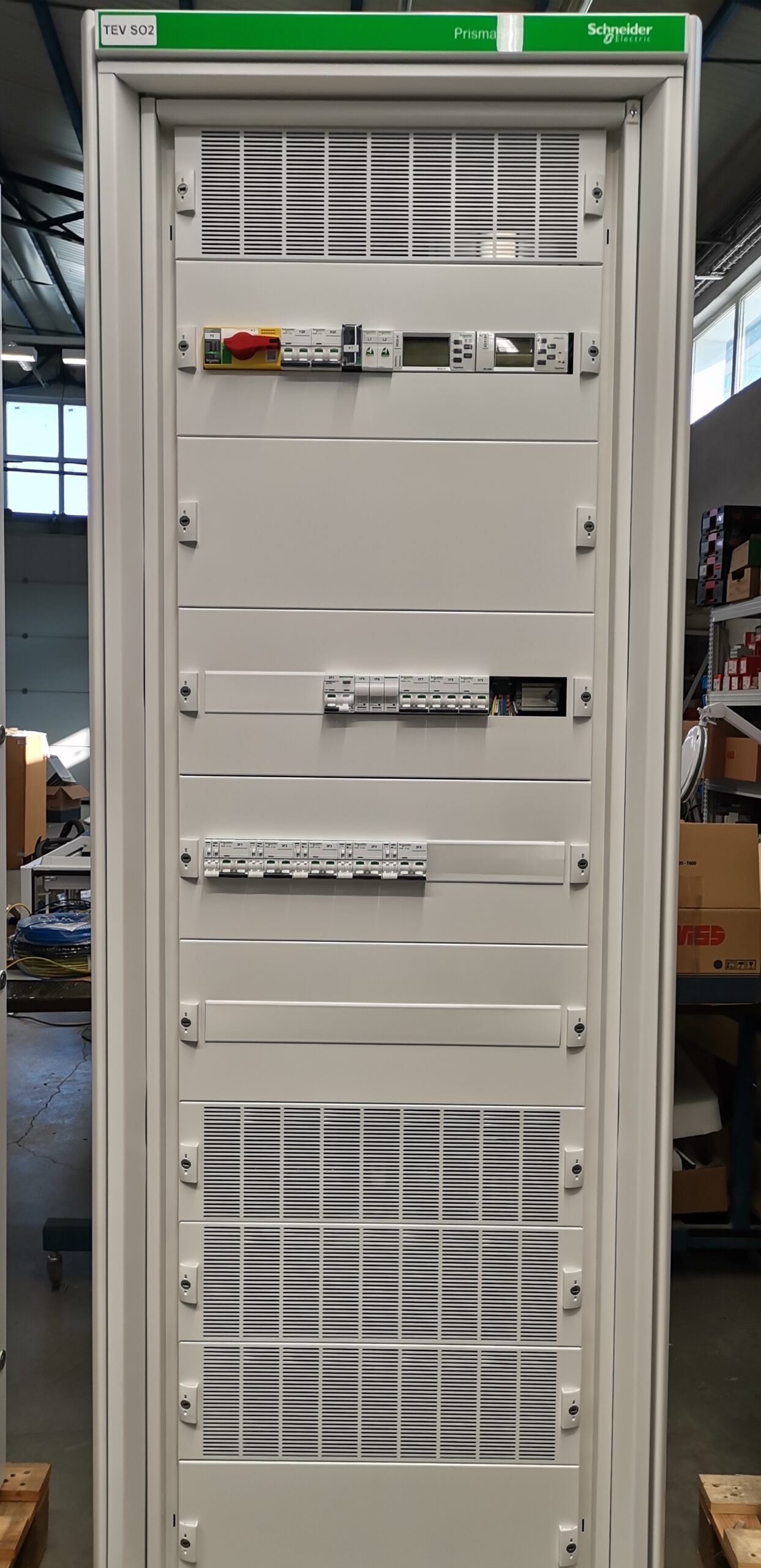
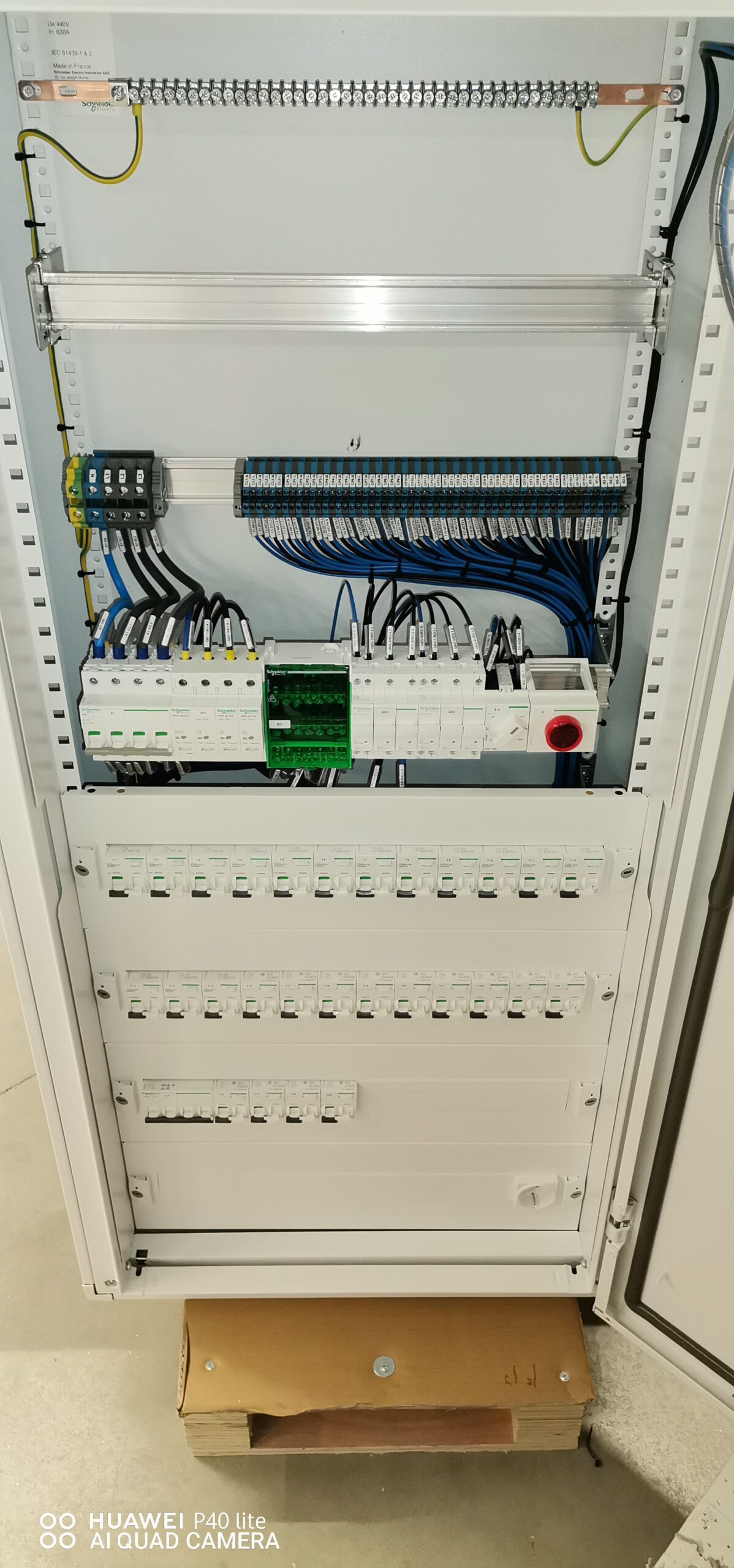
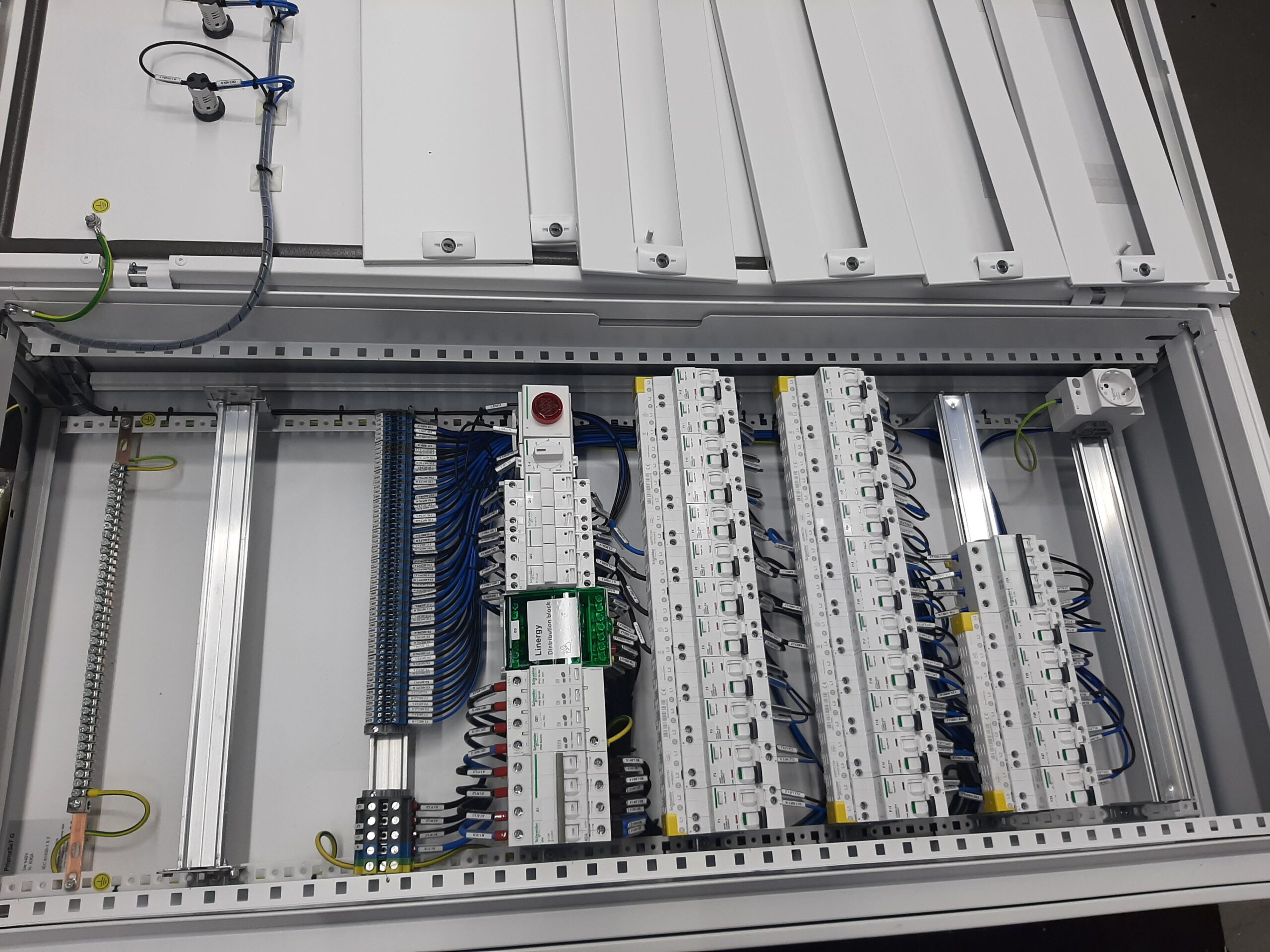
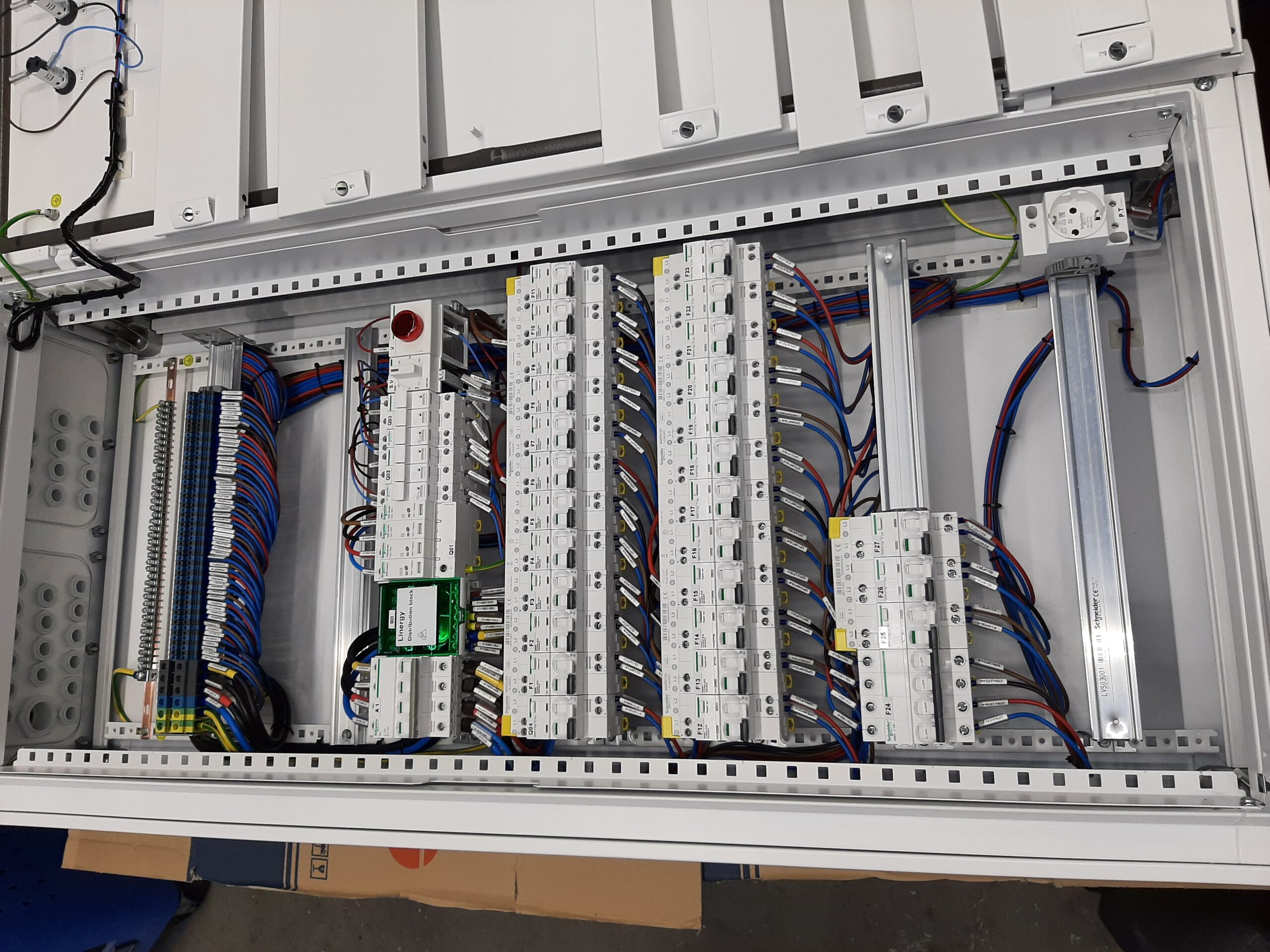
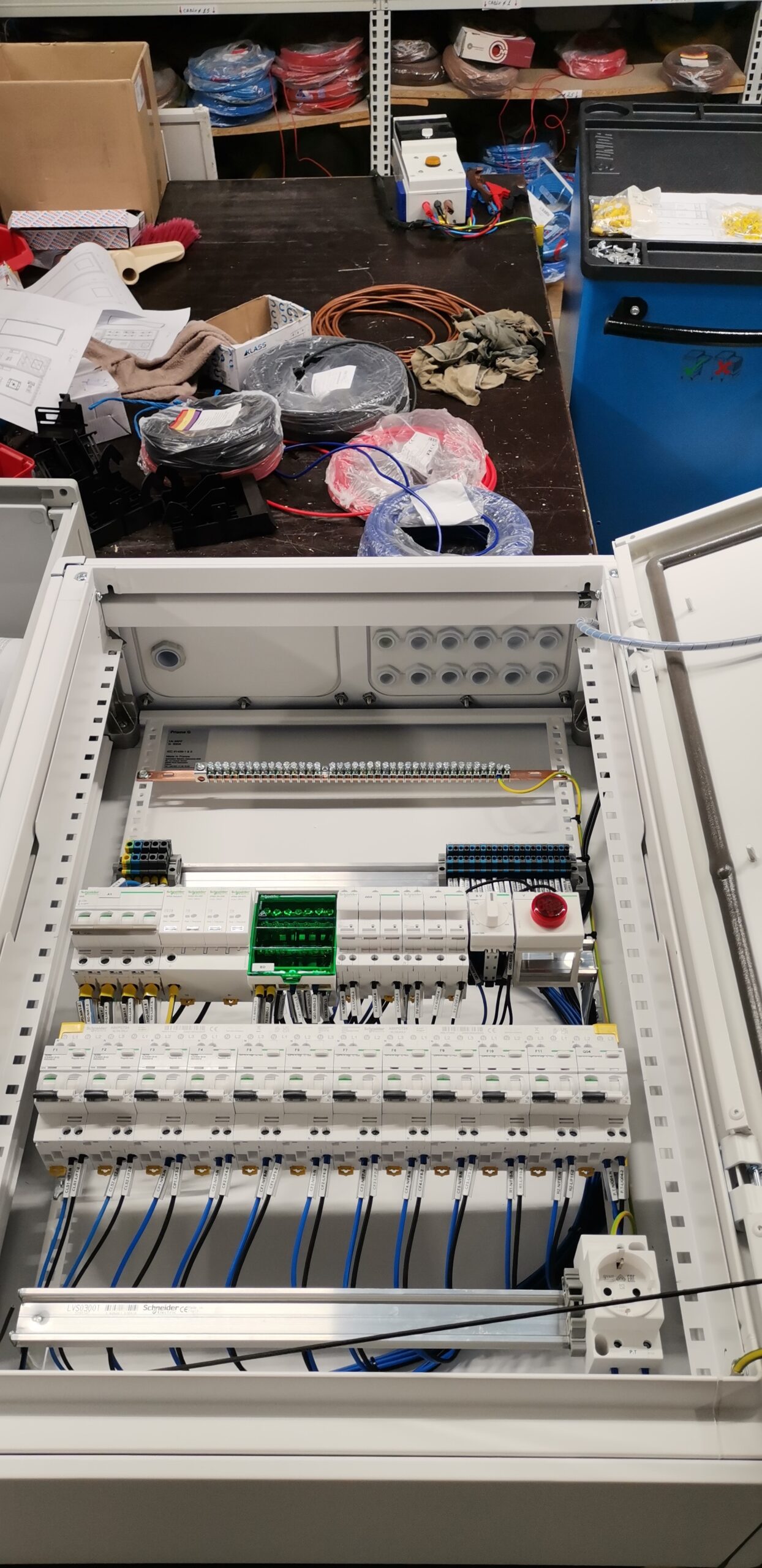
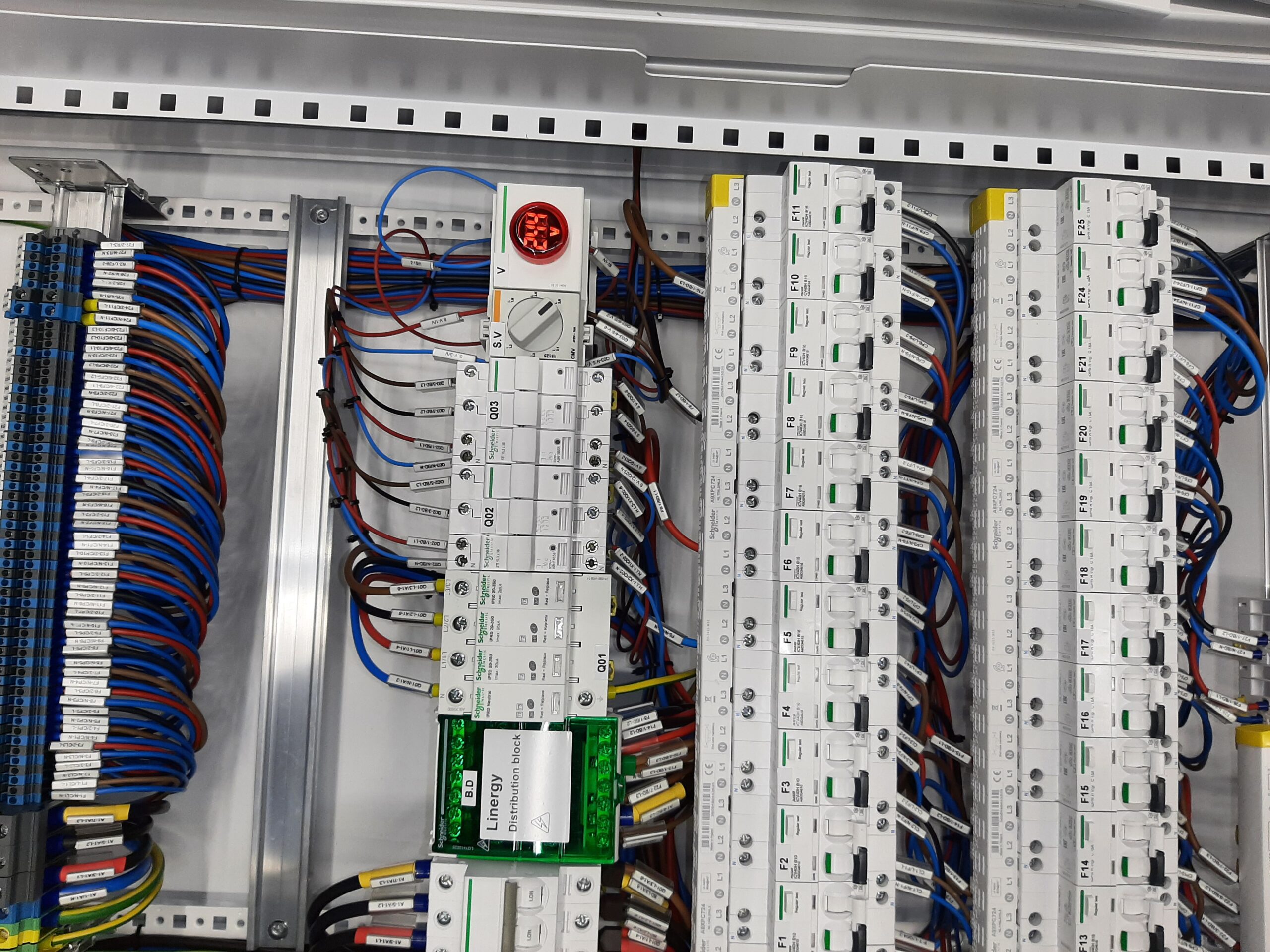
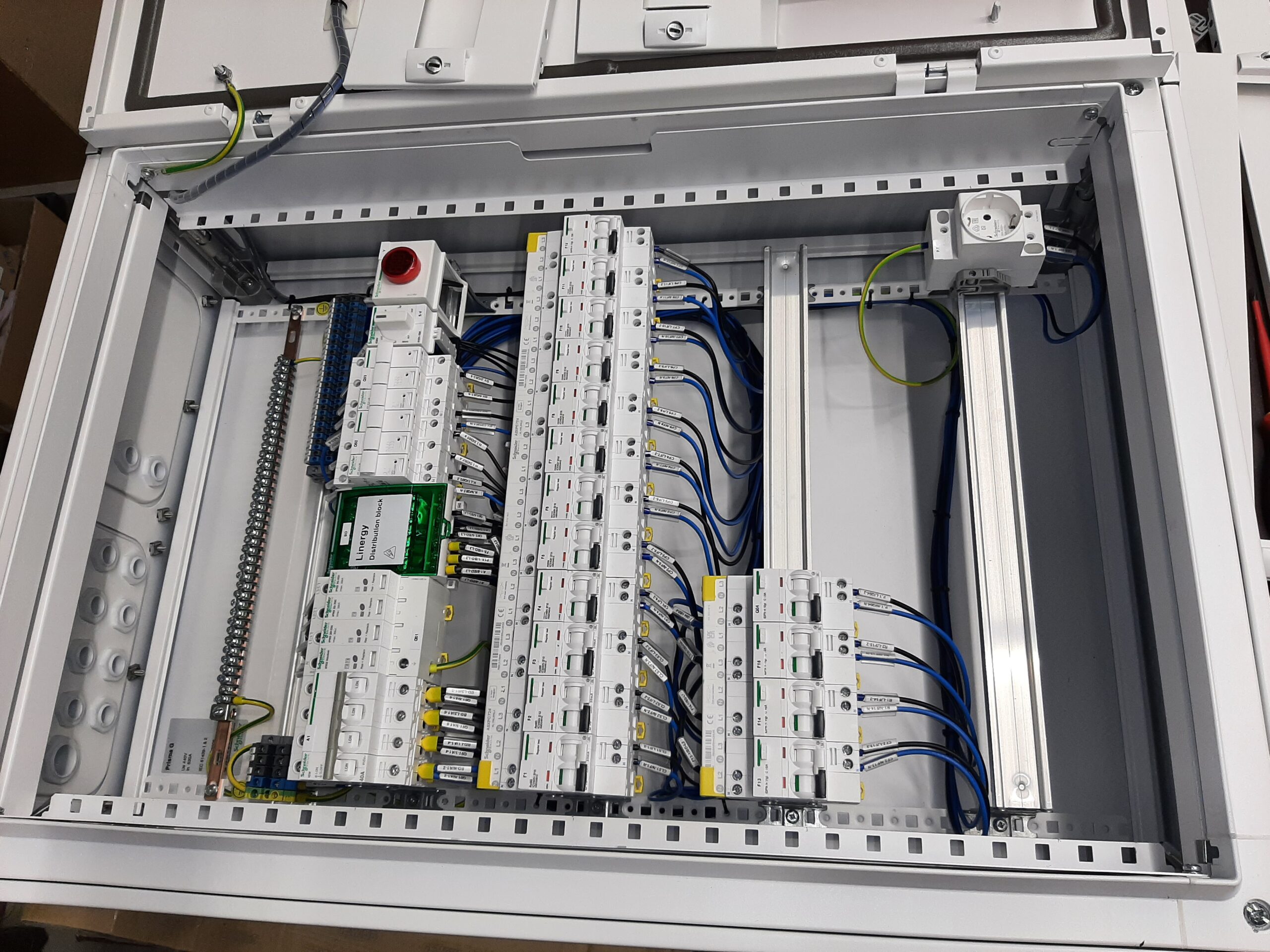
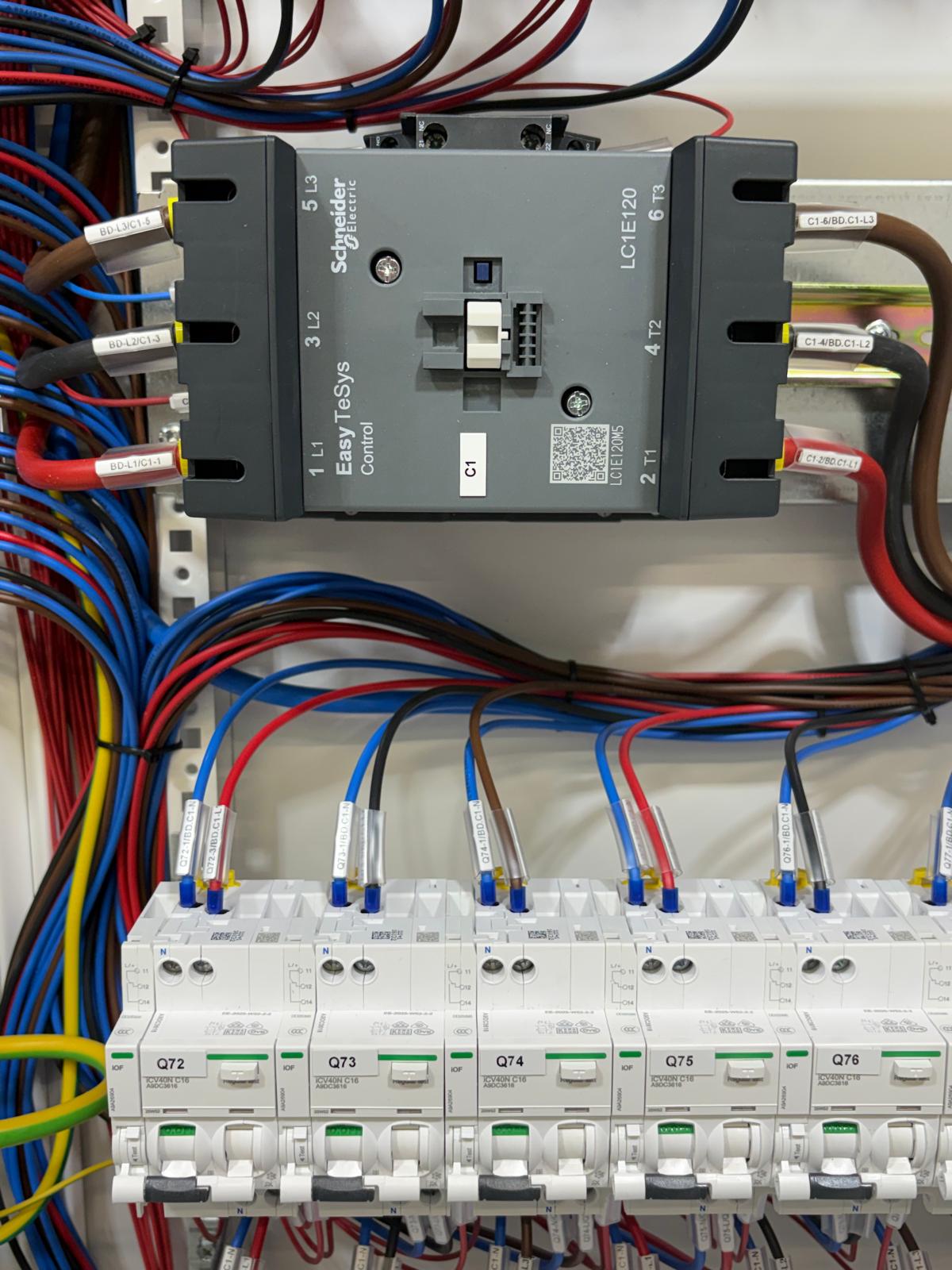
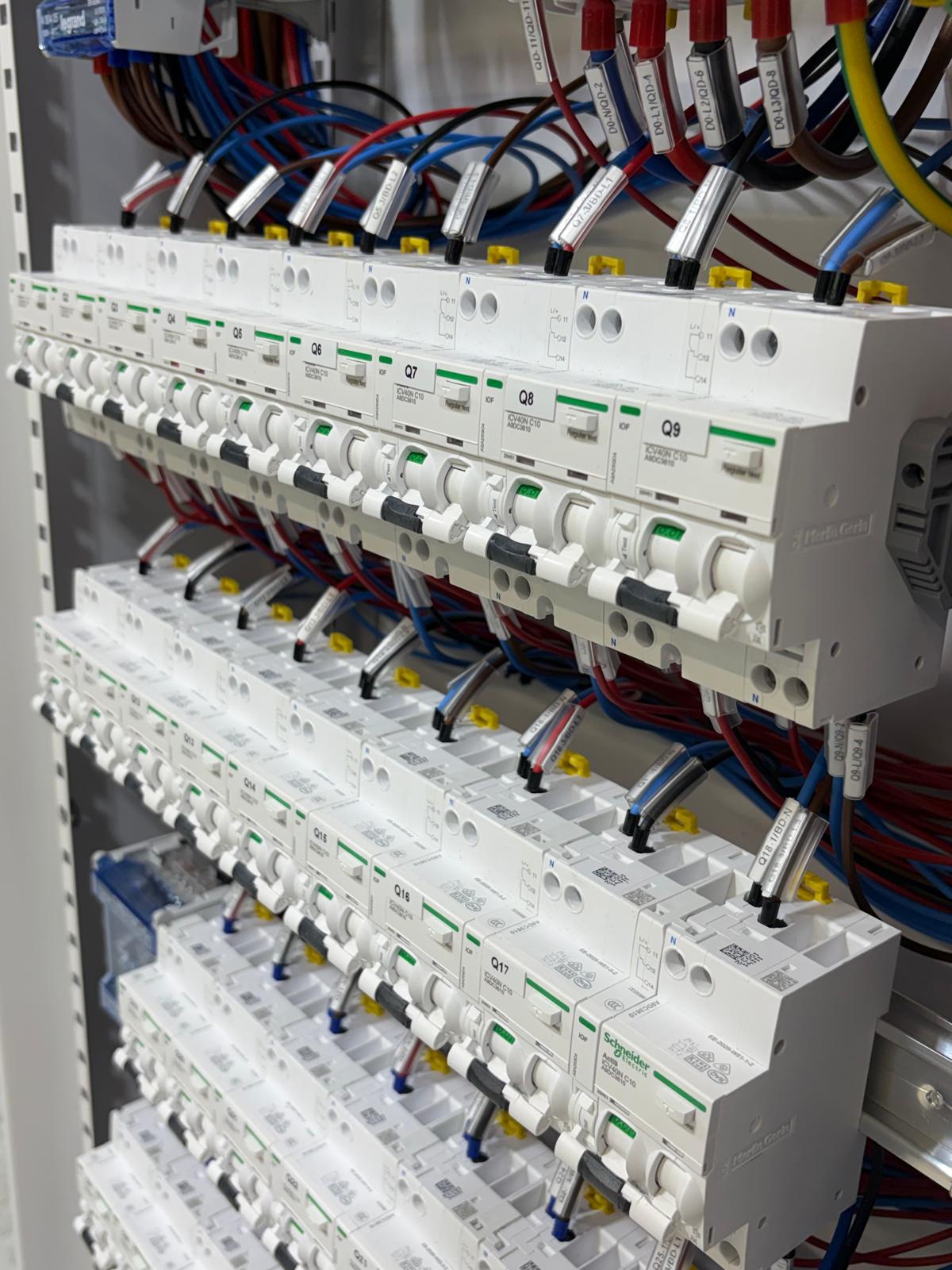
The switchboards integrate the equipment required for distribution, protection and control, with circuit configurations adapted to the loads they serve.
Separating normal loads from essential loads contributes to more efficient distribution management and helps limit the impact of a potential fault, while also facilitating maintenance and technical interventions.
Three special electrical switchboards were installed for the ICU, supplying the installations and loads associated with this medical area.
Their configuration is adapted to the specific requirements of the application and is designed to ensure controlled distribution, circuit protection and power availability for the loads served.
By integrating these switchboards into a dedicated distribution system for critical loads, the solution provides clear separation from the building’s general circuits and facilitates operation and technical interventions.
Five special electrical switchboards were installed to supply the systems serving the operating rooms, configured according to the requirements of these areas.
The switchboards provide distribution and protection for circuits dedicated to equipment and installations within the operating areas, with a focus on safety and continuity of power supply.
Separating these circuits from the general distribution system allows individual management of the installations and contributes to increased availability of the electrical infrastructure for medical areas with demanding requirements.
To optimize the energy performance of the installation, two automatic reactive power compensation banks were installed, each rated at 150 kVAr, providing a total compensation capacity of 300 kVAr.
The systems adapt the compensation to the operating conditions of the loads, helping maintain an appropriate power factor and reduce reactive power flow within the installation.
Integrating reactive power compensation into the hospital’s electrical infrastructure helps reduce losses, improve the efficient use of network capacity and optimize energy consumption.
The implemented solution also includes switchboards dedicated to the technical and auxiliary systems required for hospital operation.
Depending on the relevant area and installation, these switchboards serve the boiler room, ventilation systems, fire safety systems (SPI), lighting and socket circuits, as well as other technical areas.
Each switchboard is configured according to the characteristics of the connected loads and integrates the circuits required for power supply, protection, control and signaling.
Separating the technical installations into dedicated switchboards facilitates operation and maintenance and allows targeted interventions without unnecessarily affecting other areas of the building.
The electrical system integrates metering, monitoring and control functions required to supervise the main distribution system and equipment status.
Monitoring electrical parameters and source status provides technical personnel with the information needed to track system operation and quickly identify abnormal conditions.
Combined with the ATS and the separation of loads by functional category, the system provides a high level of control over the hospital’s electrical infrastructure.
HAVE A PROJECT IN THE PIPELINE?
Send us your project requirements. We’ll find the right solution.
Do you have electrical diagrams, technical specifications or an equipment list? Send us the documentation, and the KRONTAB team will review the requirements and get back to you with a technical and commercial solution tailored to your project.